Welcome to the whimsical world of savings accounts, where your money takes a leisurely vacation while earning interest! Picture this: your hard-earned cash lounging by the pool, sipping a mocktail, and getting a nice tan—well, kind of! In this riveting tale, we’ll explore the ins and outs of savings accounts, from their various types to the dazzling ways they can boost your financial planning game.
Whether you’re looking to stash away some cash for a rainy day or planning for the next big purchase, savings accounts offer a safe haven with perks like interest rates and liquidity that will keep your financial dreams afloat. Buckle up as we navigate the different types of savings accounts, decode interest rates, and see how they stack up against their flashy financial cousins!
Understanding Savings Accounts
Savings accounts are like the beloved pet goldfish of the financial world: they’re low-maintenance, always there when you need them, and can sometimes even surprise you with their growth! These accounts are designed to help you stash away cash while earning a little interest, so let’s dive into the varieties available and how they can impact your financial future—without putting you to sleep like a dull lecture.
Types of Savings Accounts
In the realm of savings accounts, variety is the spice of life! Here’s a rundown of the most common types you’ll encounter at your friendly neighborhood bank:
- Traditional Savings Account: The classic choice for those who prefer simplicity. Offers modest interest rates and easy access, but might leave you feeling a bit underwhelmed in the growth department.
- High-Interest Savings Account: Like a traditional account, but with a turbocharged interest rate. Perfect for those who want their money to grow faster than their neighbor’s lawn during spring!
- Online Savings Account: These accounts live in the cloud and often offer higher interest rates because they don’t have the overhead of physical branches. It’s like having a savings account in your pocket while wearing your pajamas—how comfy!
- Money Market Account: A hybrid between a savings and checking account. These typically come with a higher interest rate and may require a larger initial deposit, but be careful—some come with limited withdrawals per month, or else you might face fees!
- Specialized Savings Accounts: Some banks offer themed accounts aimed at specific goals—think vacation funds or emergency savings. It’s like having a savings account that wears a costume to a party!
Interest Rates and Their Impact on Savings
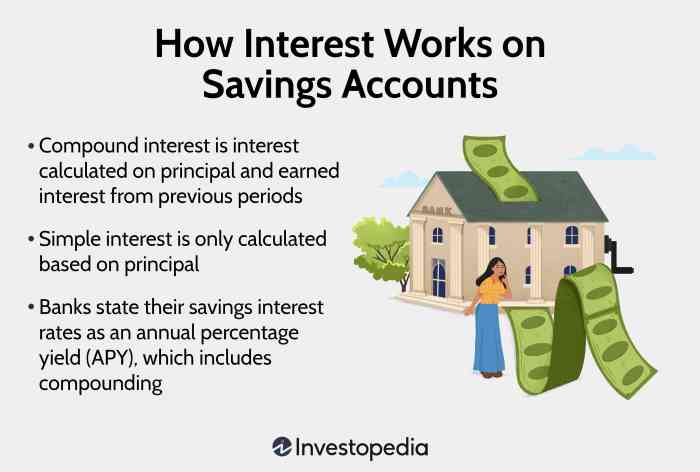
Interest rates are like the cherry on top of your financial sundae; they sweeten the deal, but they also vary based on the type of account and the bank. Here’s how they can affect your savings journey:Interest rates determine how much your money will grow over time. A higher interest rate means more earnings, which can be the difference between a modest savings pot and a mini fortune! For example, if you deposit $1,000 in a traditional savings account with a 0.01% interest rate, you’ll earn a whopping $0.10 in a year.
But, with a high-interest savings account offering 2%, you’ll pocket $20 instead!
“The magic of compound interest means your savings can grow exponentially over time, just like your love for pizza on a Friday night!”
Benefits and Drawbacks of Using a Savings Account for Financial Planning
Saving is crucial for financial security, and savings accounts have their own set of pros and cons to consider:The benefits of using a savings account include:
Liquidity
You can easily access your money whenever you need it, making it a secure place for short-term savings.
Safety
Most savings accounts are insured by the FDIC (in the U.S.) up to $250,000, ensuring your hard-earned cash remains safe from the financial boogeyman.
Interest Earnings
While not a get-rich-quick scheme, the interest earned over time can add up, especially if you diligently contribute to your account.However, there are drawbacks:
Lower Returns
Compared to stocks or other investment vehicles, savings accounts typically offer lower returns, which can feel like watching paint dry on a rainy day.
Inflation Risk
If your interest rate doesn’t keep up with inflation, your money could lose purchasing power. So while you may have more dollars, those dollars may not buy as much!
Limited Transactions
Some accounts impose limits on withdrawals, which can feel like being grounded when all your friends are out partying.Understanding the ins and outs of savings accounts can help you make informed decisions about where to stash your hard-earned cash. Remember, every penny counts, especially when it comes to building a nest egg for future adventures!
Savings Accounts vs. Other Financial Products
When it comes to saving your hard-earned dough, you might think of a savings account as your trusty old piggy bank, but with a bit more flair and interest. However, there are other contenders in the financial arena, such as money market accounts and certificates of deposit (CDs), each with their own unique quirks and benefits. In this delightful showdown, we’ll sort through the financial jungle and lay bare the key differences between savings accounts and other financial products, all while trying to keep the seriousness to a minimum.
Comparison with Money Market Accounts and Certificates of Deposit
To understand how savings accounts stack up against money market accounts and CDs, let’s break it down in a way that even your grandma could understand – with clarity and humor! Savings accounts are like the reliable friend who always shows up on time, while money market accounts are a bit more of a snazzy outfit — they come with higher interest rates but require a higher minimum balance.
CDs, on the other hand, are that friend who commits to a long-term plan and won’t bail on you for a few years. Here’s a closer look at the nuances:
- Savings Accounts: Generally offer lower interest rates but provide easy access to funds and minimal fees. Ideal for short-term savings goals.
- Money Market Accounts: Often provide higher interest rates and check-writing privileges, but usually require a larger minimum balance to avoid fees. Perfect for those who like to keep their money bustling.
- Certificates of Deposit (CDs): Offer fixed interest rates with a set maturity date. They come with penalties for early withdrawals, so only commit if you’re in it for the long haul!
Differences Between Savings Accounts and Investment Accounts
While savings accounts are the warm, fuzzy blankets of financial products, investment accounts are more like the rollercoasters at an amusement park — thrilling but a bit risky. Investment accounts can offer potentially higher returns but come with the possibility of losses that could make you scream (and not in the fun way). Let’s highlight the key differences that set these two categories apart:
- Risk Factor: Savings accounts are low-risk, often insured by the government, while investment accounts can fluctuate wildly due to market conditions.
- Return on Investment: Savings accounts provide stable but lower interest rates, while investment accounts can yield higher returns but with greater uncertainty.
- Liquidity: Savings accounts allow for easy access to your cash, whereas investments can require time to liquidate and might incur fees.
Advantages of Savings Accounts Over High-Risk Investments
Diving into the high-risk investment pool can be exhilarating, but it’s also a bit like swimming with sharks — thrilling but potentially teeth-chattering. Savings accounts, on the other hand, offer a safe haven for your funds, with some enticing advantages over their high-risk counterparts. Here’s why you might want to cozy up with a savings account instead:
- Stability: Your money won’t be doing the cha-cha in a volatile market. Savings accounts provide a safe harbor in stormy financial seas.
- Accessibility: Need cash for that surprise pizza party? Savings accounts let you access your money without jumping through hoops (or paying penalties).
- Peace of Mind: With insurance from the FDIC, your deposits are protected up to $250,000, giving you the security that high-risk investments can’t promise.
Integrating Savings Accounts into Financial Planning
In the grand carnival of financial planning, savings accounts are like the cotton candy – sweet and delightful, but they also provide the crucial energy needed to enjoy the rides. Integrating savings accounts into your budgeting strategy is not just a good idea; it’s essential for a financially stable life. Let’s take a whimsical stroll through the land of savings and discover how they can help pave the road to financial awesomeness.
Incorporating Savings Accounts into Budgeting Strategies
When it comes to budgeting, think of your savings account as the trusty sidekick in your financial superhero saga. It’s always there to catch you when your wallet takes a tumble. Here are some tips on how to make your savings account shine in your budgeting:
- Set Clear Savings Goals: Define what you’re saving for – be it a vacation, a new car, or the latest gadget. This will give your savings account a purpose, like a superhero with a mission.
- Automate Your Savings: Set up automatic transfers to your savings account right after you get paid. It’s like sending your money to the gym – it’ll get stronger without even realizing it.
- Use a Budgeting App: Leverage technology to track your spending and savings. Many apps can integrate directly with your savings account, providing you with insights that are more enlightening than a light bulb moment.
- Prioritize Savings in Your Budget: Treat savings like a non-negotiable expense. If you can budget for your avocado toast and lattes, you can budget for your future!
The Role of Savings Accounts in Major Purchases
Planning for big-ticket items like auto loans or a down payment on a house can feel like preparing for a trip to Mars. But with a savings account in your toolkit, you’ll be ready for lift-off! Here’s how savings can help you prepare:
- Down Payments: Saving for a down payment on a house or car is crucial. Many lenders require a certain percentage upfront, and having that cash saved can save you from drowning in debt.
- Emergency Fund: Having a separate savings account for emergencies can prevent you from relying on high-interest loans. Think of it as a life raft in a sea of debt!
- Improving Your Loan Terms: The more you save, the more you can reduce your loan amount, which translates to better interest rates and lower monthly payments. It’s like negotiating a discount on your favorite snack – who doesn’t love that?
Savings as a Shield Against Bankruptcy and Debt Management
In the battle against debt, your savings account acts as a protective shield. A well-padded savings account can save you from the perils of bankruptcy and help you manage debt like a pro. Here’s how:
- Debt Payments: Having savings allows you to make extra payments on high-interest debts, thus minimizing the total interest paid. It’s like casting a spell that vanishes your debt faster!
- Buffer Against Financial Emergencies: Unexpected costs can lead to reliance on credit cards, which often carry high-interest rates. Your savings account can act as a buffer, keeping you from falling into the debt trap.
- Improved Credit Score: Maintaining a healthy savings balance can help you pay bills on time and reduce your debt-to-income ratio, positively impacting your credit score. A good score opens doors to better financial opportunities!
Closure
As we draw the curtains on this financial escapade, remember that savings accounts are not just boring bank boxes—they’re your trusty companions in the quest for financial security! With the right knowledge, you can leverage these accounts to not only save but thrive, steering clear of debt and preparing for future splurges. So go ahead, give your savings a spot in your financial plan, and watch as your money grows while you sit back and enjoy the ride!
Questions Often Asked
What is the minimum balance required for a savings account?
Minimum balances vary by bank, but many savings accounts allow you to start with as little as $1!
How often do savings accounts pay interest?
Most savings accounts pay interest monthly, but some might offer quarterly or annual payouts!
Can I withdraw money from my savings account anytime?
Generally, yes! Just keep in mind that some accounts may limit the number of withdrawals each month.
Are savings accounts insured?
Yes! Most savings accounts are insured by the FDIC (in the U.S.) up to $250,000, so your money is safe!
What happens if I don’t maintain the minimum balance?
Some banks will charge you a fee if you dip below the minimum balance, so keep an eye on your cash!